
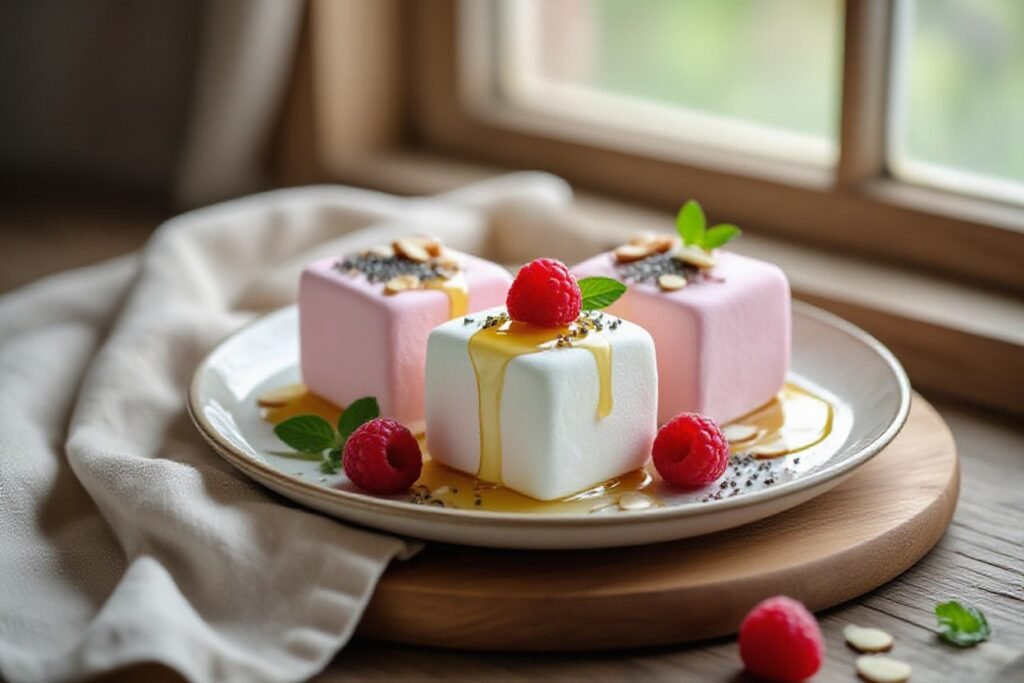
Zefir, a delightful confection, offers a guilt-free pleasure you’ll adore. I’m excited to share my go-to recipe for this healthy dessert, perfect for satisfying your sweet tooth without compromise. You’ll find it surprisingly easy to make, and your taste buds will thank you.
Key Takeaways:
* People are really looking for healthier treats these days, and zefir fits right in. It’s naturally low in calories and fat, especially compared to a lot of other desserts out there. Just think, you can enjoy something sweet without feeling guilty about it – that’s a big win for anyone trying to watch what they eat.
* The main ingredient in zefir, fruit puree, brings a nice dose of vitamins and fiber to the table. This isn’t just empty calories; you’re actually getting some good stuff in there. Plus, using natural fruit means you’re avoiding a bunch of artificial flavors and colors, which is something a lot of us are trying to cut back on.
* Making zefir at home gives you total control over the ingredients, which is pretty awesome. You can pick your favorite fruits, adjust the sweetness to your liking, and even swap out sugars for healthier alternatives if you want. It’s a fun way to get creative in the kitchen and make a dessert that’s exactly what you’re looking for.
What exactly is zefir and why’s it so special?
It’s basically a cloud you can eat
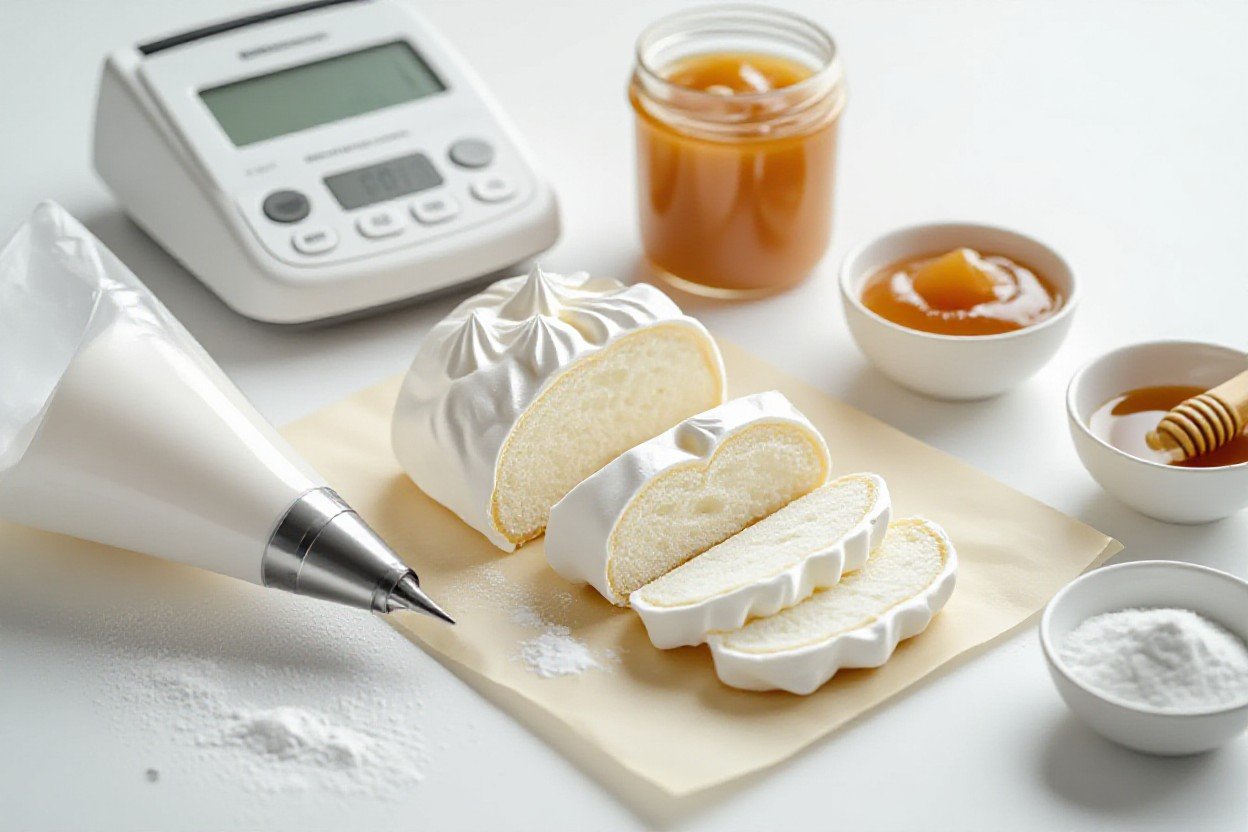
Imagine a dessert that’s impossibly light, airy, and melts in your mouth – that’s zefir. It’s a marshmallow-like confection, but so much more delicate, often made with fruit puree, egg whites, and agar-agar. You’ll find it’s a truly unique texture.
Why I think it’s the ultimate guilt-free treat
I love how zefir offers a sweet indulgence without the heavy feeling. It’s naturally low in fat and, when prepared correctly, can be surprisingly low in sugar too. You’re getting fruit benefits, which I find fantastic.
For me, zefir isn’t just a dessert; it’s a smart choice. I control the ingredients when I make it myself, opting for natural sweeteners and fresh fruit purees, so I know exactly what I’m eating. This makes it perfect for when I want something sweet but don’t want to derail my healthy eating goals – it’s a win-win, really.
Here’s the stuff you’re gonna need
Gathering your ingredients for my Zefir recipe is pretty straightforward, but I’ve got a couple of tips for you. You’ll definitely want to check out this recipe for Zefir Marshmallows (Crazy Easy) if you need a visual guide for the finished product. Trust me, it helps to see what you’re aiming for.
Seriously, don’t skip the apple pectin
Apple pectin is your secret weapon here, and I’m not just saying that. This natural gelling agent gives Zefir its signature light-as-air texture. Without it, you’re not getting that perfect chew, that delightful melt-in-your-mouth experience.
Choosing the right sweetener for your vibe
Picking your sweetener really depends on what you’re going for in terms of health benefits and taste. I’ve experimented with a few different options, and each one brings something unique to the table. Think about your dietary needs and what flavor profile you prefer.
I’ve found that using erythritol or xylitol works wonderfully if you’re keeping an eye on your sugar intake; they provide sweetness without the glycemic spike. For a more natural approach, a good quality honey or maple syrup can add a lovely depth of flavor, though you’ll need to adjust the liquid content slightly. Just remember, taste as you go – that’s my best advice.
How to whip this up without losing your mind
You’re probably thinking, “Zefir? That sounds complicated.” Trust me, it’s not. I’ve broken down each step to make your zefir journey smooth and enjoyable, so you can focus on the delicious outcome instead of kitchen chaos. I’ll guide you through the process, ensuring your healthy dessert comes out perfectly every time.
Making the fruit base is easier than it looks
Only three ingredients stand between you and a vibrant fruit purée. I usually choose apples, but berries or peaches work wonderfully too. Just cook them down, then blend until silky smooth – that’s it!
Getting those stiff peaks just right
Your meringue’s success hinges on proper whipping. Start with clean, dry equipment; any grease will ruin your efforts. Then, slowly add sugar once the egg whites are foamy, whipping until they form peaks that hold their shape proudly.
Achieving those perfect stiff peaks isn’t just about speed; it’s about technique and patience, you know? I always tell people to start on a medium speed, letting the egg whites build volume gradually. See those soft bubbles forming? That’s your cue to begin drizzling in the sugar, a little at a time, while the mixer keeps going. You’re looking for a glossy, marshmallow-like consistency, where if you lift the whisk, the peak stands tall and doesn’t droop over. It should be firm, not runny, and if you gently rub a tiny bit between your fingers, you shouldn’t feel any sugar granules. That’s how you know you’ve nailed it – ready for the next step in your zefir adventure!
Let’s talk about what could go wrong
So, you’ve followed my zefir recipe, you’re excited, but sometimes things don’t quite go as planned, right? Don’t worry, even I’ve had my share of kitchen mishaps. Let’s troubleshoot some common issues you might encounter on your journey to perfect zefir.
Why isn’t my zefir setting properly?
Is your zefir just not firming up? You might be wondering if you did something wrong. It often comes down to the pectin in your fruit puree or how long you’re whipping the meringue. Make sure that meringue is stiff!
The real deal about humidity and sugar
Ever notice how some days your zefir just doesn’t dry? The air around us plays a bigger role than you’d think. High humidity can really mess with the drying process, making your beautiful zefir stay sticky longer.
I can’t stress enough how much humidity impacts your zefir. Think about it – sugar is naturally hygroscopic, meaning it loves to absorb moisture from the air. If your kitchen feels a bit damp, or it’s raining outside, your zefir will struggle to form that lovely dry crust. You might even find it weeping a bit, which is totally normal in high humidity. I always check the weather forecast before I even consider making a batch; it’s a game-changer, honestly. Sometimes, you just have to wait for a drier day. And don’t even get me started on making caramel on a humid day – same principle, different dessert!
My favorite ways to customize the flavor
I love playing around with flavors in my zefir, really making it my own. You can totally transform the basic recipe with just a few simple additions, tailoring it to your mood or whatever fruit is in season. It’s all about experimenting and finding what you truly enjoy.
Throwing in some tart blackcurrant for a kick
Sometimes I crave something a little sharp, something to cut through the sweetness. Blackcurrant puree works wonders, giving a bright, tangy counterpoint that’s just fantastic. It adds such a vibrant color too!
What’s better than a little vanilla bean?
A classic for a reason, vanilla bean takes this dessert to another level. Its aromatic warmth is incredibly comforting. I find it adds a depth you just can’t get from extract.
Vanilla bean flecks swirling through the airy zefir are just gorgeous, aren’t they? The complex, sweet, and slightly woody notes from real vanilla bean paste or scraped seeds truly make a difference, infusing every bite with that unmistakable, luxurious fragrance. You’ll notice the difference right away; it’s a subtle upgrade that speaks volumes.
Keeping your batch fresh and fluffy
You’ve whipped up a beautiful batch of zefir, and they’re perfect right now – light, airy, and oh-so-delicious. But how do you keep that magic going? I know you want to savor them for more than just a fleeting moment, and I’m here to tell you it’s totally possible.
Where should you actually store these?
Many people think the fridge is best, but that’s not always true for zefir. I find a cool, dry place works wonders. Your pantry or a cupboard away from direct sunlight is usually ideal.
Tips for making them last more than a day
Preserving that delicate texture is key, and I’ve got a few tricks up my sleeve. Don’t just toss them onto a plate and hope for the best, because they’ll definitely dry out.
* Airtight containers are your best friend here, seriously.
* Separate layers with parchment paper to prevent sticking.
* Avoid extreme temperature changes; it messes with the consistency.
* Thou shalt not store them near strong-smelling foods.
It’s tempting to just leave them out for easy snacking, I get it, but your zefir will be sad and stiff if you do. I always make sure mine go into an airtight container, and I even layer them with a bit of parchment paper between each one. This prevents them from sticking together and getting squashed, which nobody wants after all that effort. And you know, sudden temperature shifts are the enemy of delicate meringues like zefir; they’ll weep or get tough. Thou really must keep them away from anything pungent in your pantry, like onions or garlic – zefir absorbs flavors like crazy.
Conclusion
Presently, I find zefir to be a truly delightful healthy dessert option. You can feel good about indulging in this treat, knowing your body will appreciate the natural ingredients. I’m confident you’ll discover, as I have, that making zefir is a rewarding experience, offering both enjoyment and nourishment. It’s a wonderful way to satisfy a sweet craving without any guilt.
FAQ
Q: How does a Zefir recipe transform into a genuinely healthy dessert, and what makes it different from traditional versions?
A: Making Zefir a healthy dessert isn’t some magic trick; it’s all about smart ingredient swaps. The big difference from your grandma’s Zefir is usually the sugar content and artificial stuff. Traditional Zefir can be a real sugar bomb, loaded with refined sugars that give you that quick spike and then a crash. Our healthy Zefir recipe cuts way back on that, often using natural sweeteners like fruit purees or a tiny bit of maple syrup. Think about it: you’re getting natural sweetness and fiber from fruit, not just empty calories.
Another key aspect is gelatin or agar-agar. Traditional recipes use these for that signature bouncy texture. We stick with those, but focus on quality, sometimes even opting for grass-fed gelatin. Also, we avoid artificial colors and flavors entirely. Your Zefir gets its lovely hue and taste from actual berries or natural extracts. It’s a dessert that won’t leave you feeling guilty or sluggish, which is a big win in my book.
Q: What are the primary health benefits one can expect from incorporating this healthy Zefir into their diet, beyond just being a lower-sugar treat?
A: Oh, the benefits go way beyond just less sugar, trust me. When you make Zefir with real fruit, you’re packing in antioxidants and vitamins. Berries, for instance, are little powerhouses for your immune system and skin health. That’s a lot better than just eating something that tastes sweet but offers nothing else, right?
And let’s talk about the gelling agents. Gelatin, for example, is fantastic for gut health. It contains amino acids that can support your digestive lining. Some people even find it helps with joint health and strong nails. Agar-agar, a plant-based alternative, brings its own set of benefits, like being a good source of fiber. So you’re not just enjoying a tasty treat; you’re actually giving your body a little boost. It’s a dessert that works for you, not against you.
Q: Are there specific ingredient substitutions or preparation techniques that are absolutely crucial for ensuring a Zefir recipe remains both delicious and genuinely good for you?
A: Absolutely, there are a few non-negotiables if you want healthy and delicious Zefir. First off, ditch the refined white sugar. Seriously, just say no. Instead, use fruit purees as your main sweetener and flavor base. Apple puree, berry purees, even a little mashed banana can work wonders. If you need a touch more sweetness, a tiny drizzle of raw honey or pure maple syrup is far superior to processed sugars. You want that natural sweetness, not that overly saccharine taste.
And here’s a big one: use high-quality gelling agents. If you’re using gelatin, go for grass-fed. If agar-agar is your choice, make sure it’s pure and good quality. These are what give Zefir its unique texture, so don’t skimp. Also, don’t overdo it with the purees; you still need that firm structure. Mixing your fruit puree with egg whites and whisking them just right is a technique you’ll want to master. It creates that light, airy fluffiness. It’s a balance, really, between keeping it healthy and getting that perfect Zefir bounce. You can absolutely have both, but you gotta be smart about your ingredients and your method.
The best tool for making dishes and desserts https://amzn.to/4tJjJ9e
More interesting recipes in my blog https://puredessertjoy.com/healthy-dessrt-keto-recipe-jellies/